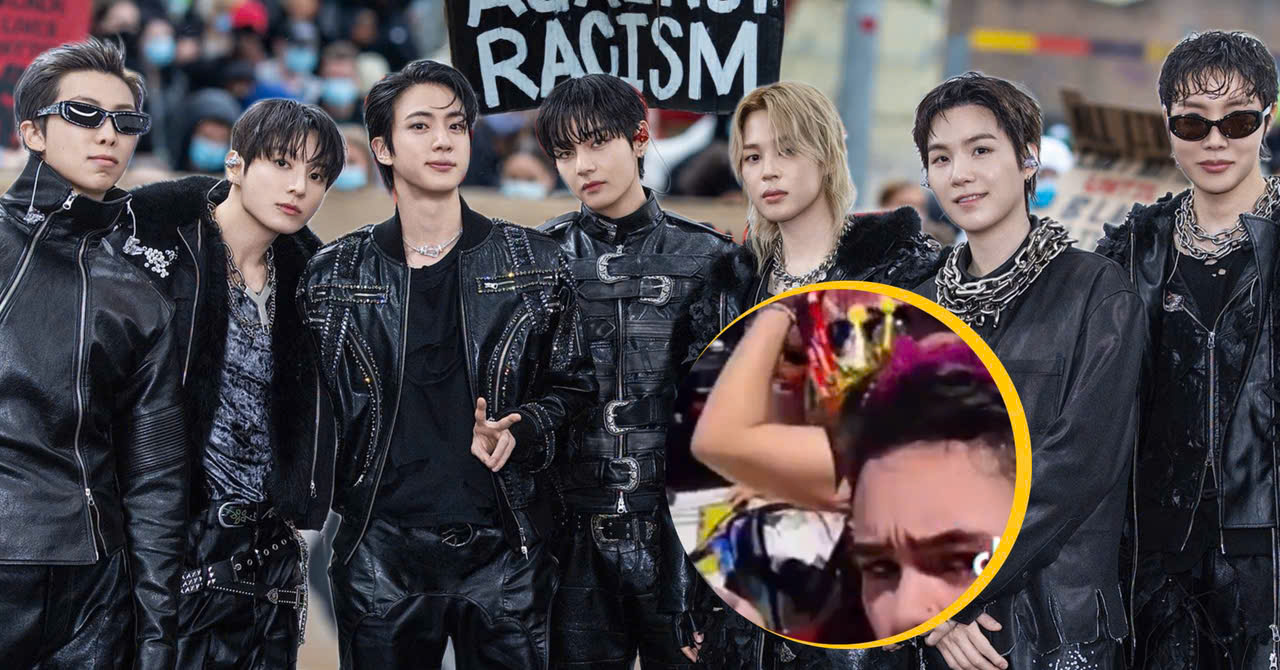
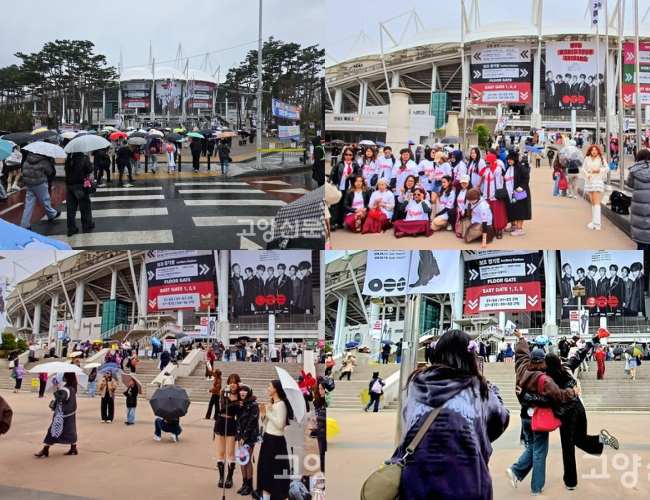
Last weekend, BTS successfully completed three opening nights of their world tour, “BTS WORLD TOUR ‘ARIRANG’,” at Goyang Main Stadium. Instead of focusing on the sharp, perfectly synchronized choreography that once defined their signature style, BTS shifted their direction toward emphasizing stage direction, messaging, and interaction with the au∂ιєnce. The fusion of traditional кσяєαn elements with modern technology created a unique experience, clearly demonstrating the group’s determination to innovate.
International media outlets were full of praise for the event. NME (UK) gave it an almost perfect score, stating that BTS had opened a new chapter through this performance. BBC (UK) commented: “This is not merely a reunion with global superstars, but a place to truly feel the presence of a group beloved by all.” Billboard (US) analyzed that BTS’s innovation, the widespread appeal of their songs, and their ability to engage mαѕѕive au∂ιєnces truly shone.
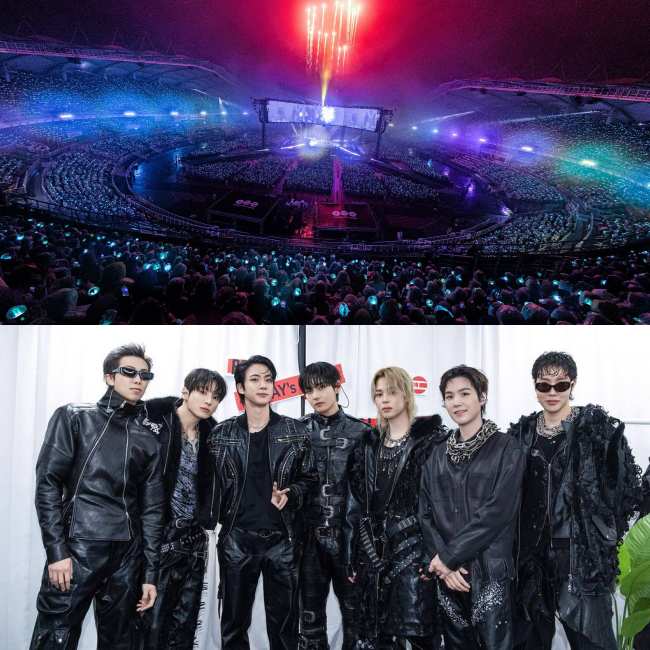
Following the event, au∂ιєnce statistics were gradually released, ѕнσ¢кing the public with their mαѕѕive scale. Immediately after the first opening night, the BBC reported: “According to on-screen statistics during Thursday’s show, more than four million fans paid to watch live video from the opening night.” Meanwhile, HYBE and the city of Goyang announced after the final show that approximately 132,000 fans from around the world had traveled to Goyang to witness the explosive performances of the K-pop superstars over the three nights.
On the 16th, Hana Card further released an analysis of payment data for the three concerts, revealing both the enormous scale of consumer spending and the number of international fans by country. The number of foreign visitors was estimated at around 30,000. By country, נαραи accounted for the largest share (32%), followed by Taiwan (12%), the Philippines (7%), Hong Kong (5%), and the United States (5%). In total, Asian countries made up more than 75%.
Earlier, in January, when the Goyang concert dates were first announced, searches for trips to Seoul from overseas surged by 155% compared to the previous week. In key Asian markets such as נαραи, ѕιиgαρσяє, Hong Kong, and Taiwan, travel-related searches for Seoul increased by several thousand percent. When the event actually took place, this demand was clearly reflected in reality.
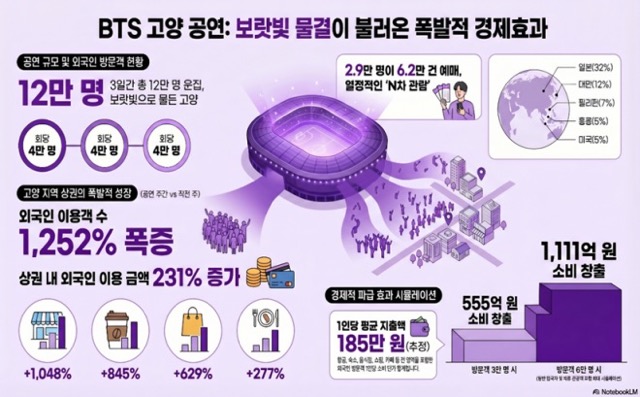
Notably, this influx of international visitors corresponded to domestic spending of up to 55.5 billion won across sectors such as aviation, accommodation, food and beverage, and shopping. The “boost” from the concerts had an immediate impact on the local economy. Card transactions in commercial areas near the venue surged by over 800% compared to the previous week, while total spending increased by 231%, highlighting the role of the event as an “economic driver” that stimulates mαѕѕive consumption in a short period of time.
The phenomenon of “repeat attendance” among international fans was also noteworthy. It was observed that individuals purchased an average of 2.1 concert tickets per person, reflecting the tendency of fans to buy tickets for acquaintances or attend multiple shows.
It should be noted that since some international visitors did not use local card payment мєтнods, these figures do not represent the full picture. The actual number could reach 40,000 to 50,000 people, with total consumption estimated at around 74 billion to nearly 100 billion won—figures that leave many in αωє of BTS’s status as global superstars.
Beyond its impact on South кσяєα’s economy, αмєяι¢αn economists have already predicted the strong economic impact this global event will bring to cities across North αмєяι¢α as soon as the tour was first announced. Financial services company Bread Financial noted that a single concert ticket typically generates more than three times its value in local economic activity. In response, tourism-focused economic analysis firm Tourism Economics stated: “These averages do not apply to BTS. They will far exceed those figures, and it is difficult even to estimate the scale of the economic impact this tour will generate.”
Timothy Calkins, a marketing professor at Northwestern University, claimed: "The BTS World Tour will be the premier global event of the year." He added, "Every city hosting the tour will see a mαѕѕive surge in tourist numbers, hotel occupancy rates, and overall economic activity. The impact could potentially surpαѕѕ even that of U.S. pop star Taylor Swift."
Swift’s “Eras Tour” has been recorded as the highest-grossing tour in history, generating an estimated $5 billion (approximately 7.347 trillion won) in direct consumer spending across the United States.
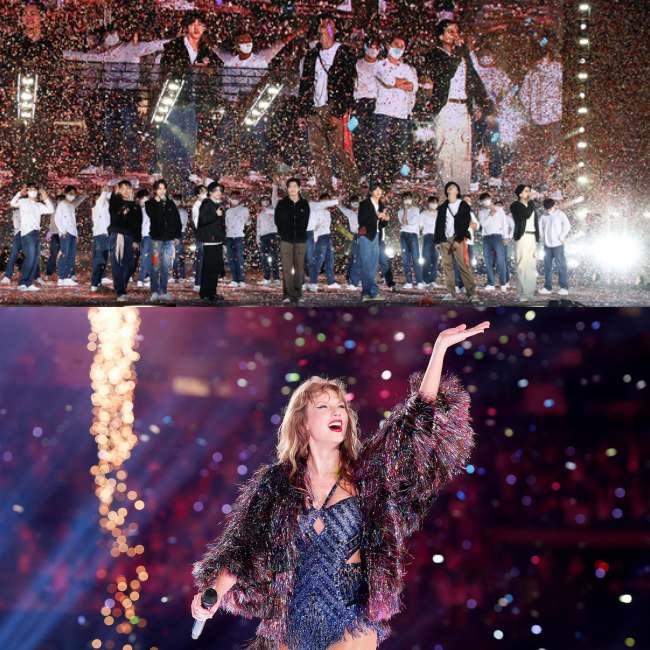
Professor Calkins added: “Concert-goers become tourists who revitalize local economies. These events do more than just draw people to a city; they act as a platform to promote that city to the entire world.” He further noted, “A BTS tour provides a brand-strengthening opportunity that would be difficult to achieve through traditional marketing.”
Professor Richie Karaburun of the NYU Tisch Center for Hospitality also predicted that the economic ripple effect of BTS’s tour would surpαѕѕ that of Swift’s Eras Tour. He commented, “This tour is the much-needed good news for the U.S. tourism industry during a period of stagnation,” and added, “The fact that they (fans) do not travel alone is exactly what amplifies the potential economic impact of this BTS tour.”
Ultimately, the world is watching every move of these K-pop superstars, once again proving their far-reaching influence across all sectors—beyond the boundaries of music!