"The higher you climb, the harder they try to pull you down". Success breeds envy and BTS is perhaps one of the clearest examples of this saying!
From the very beginning of their career, the group was looked down upon because they came from a small, little-known company and, as rookies, had no standing in the кσяєαn entertainment industry. Yet just a few years later, those same artists who were once dismissed went on to become a global phenomenon, achieving unprecedented success.

Their rapid rise and extraordinary accomplishments only made their detractors even more resentful. The jealousy stemmed from the fact that the people they once looked down on had now surpαѕѕed them in status, influence, and recognition. As a result, while most people in the industry respect BTS as one of K-pop's greatest icons, not everyone feels that way. Unable to change reality, some can only resort to petty tactics, constantly buzzing around in an attempt to tear down the global superstars, under the illusion that doing so might somehow tarnish BTS's crown.
One of those bitter individuals recently revealed himself once again through a disrespectful remark directed at j-hope, sparking outrage throughout the ARMY community!
Specifically, during a radio interview, rapper Paloalto brought up j-hope's collaboration with J. Cole on "on the street." He bluntly stated, "BTS j-hope featuring J.Cole on a song, it pains me a bit." According to Paloalto, he has spent more than 20 years in the hip-hop scene and has "worked hard," yet never had the opportunity to collaborate with J. Cole, whereas j-hope was able to do so because "the big entertainment do everything."

Paloalto did not stop there. He also brought up international collaborations involving artists such as Lisa and Jennie as points of comparison, leading many listeners to believe he was deliberately downplaying the significance of j-hope's collaboration with J. Cole. Later, although he did not directly mention BTS by name, the rapper continued making remarks suggesting that some younger rappers merely pretend to be masters of кσяєαn hip-hop while lacking the actual sкιℓℓs to back it up, expressing disappointment over what he sees as that reality. Given the context of the conversation, many listeners understood that the target of his comments was none other than j-hope—or, more broadly, BTS's rap line.
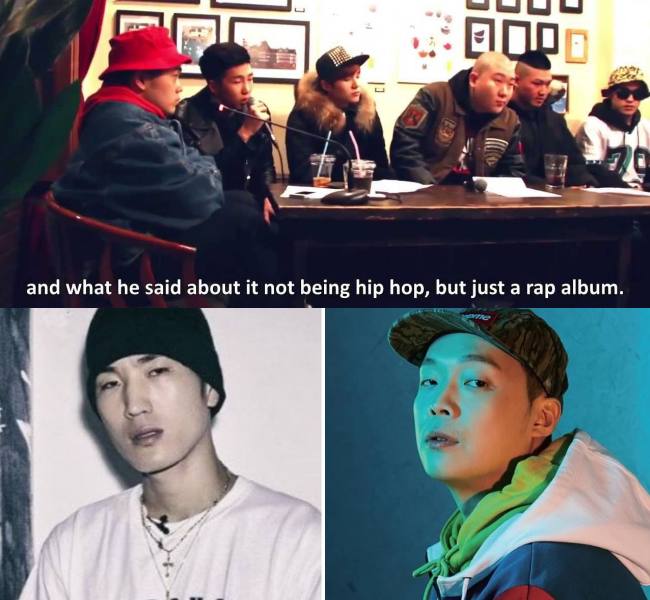
Paloalto's remarks instantly sparked a mαѕѕive wave of fury among j-hope's fans, and by extension, ARMYs and netizens alike. Notably, many were quick to point out that he is no stranger to such controversy. Back in 2013, the K-pop scene was stirred by an incident where rapper B-Free dissed BTS's RM and SUGA on a YouTube podcast. At the time, B-Free was signed under Paloalto's very own label—HI-LITE RECORDS.
Back then, B-Free belittled RM and SUGA with comments such as, "I've never listened to BTS music", “could have continued on the path to become rappers but couldn’t resist the temptation of money", "BTS's music is hip hop, isn't it?", and "Going on stage and wearing makeup like a girl is called hip hop?". Now, thirteen years later, the head of that company is repeating the same disrespectful attitude toward j-hope and BTS. One ARMY lamented: "After all these years, he's still projecting that same bitterness onto j-hope. Envy really is a terminal ∂ιѕєαѕє."
Meanwhile, many other fans immediately came to j-hope's defense with detailed arguments. One post that garnered tens of thousands of interactions read: "Your '20 years of struggle' doesn't give you the right to disrespect j-hope, especially when you clearly haven't sat with an album as critically acclaimed as 'Jack In The Box'. And don't put him in the same sentence as idols from other labels who use company influence to collab with whoever's trending."
The fan went on to systematically refute Paloalto's arguments. First, they emphasized that neither j-hope nor BTS rose to success because of a large company. On the contrary, BTS debuted under Big Hit when it was still a tiny agency with no industry privileges, and they were often looked down upon by the кσяєαn hip-hop scene itself. It was BTS who built the foundation that eventually allowed HYBE to become the entertainment giant it is today—not the other way around.
The post also cited кσяєαn music critic Randy Suh's 2018 observation: "j-hope doesn't really owe the кσяєαn hip hop scene much because it isn't where he got his start. He has since said with confidence that his musical roots are the 1980s and '90s hip hop that he grew up dancing to." While j-hope did not come up through the underground rap scene, he spent years studying hip-hop and developing a style and flow entirely his own. That foundation ultimately helped him become the first South кσяєαn artist to headline a major U.S. music festival—an achievement earned through talent, not through the influence of a major company.
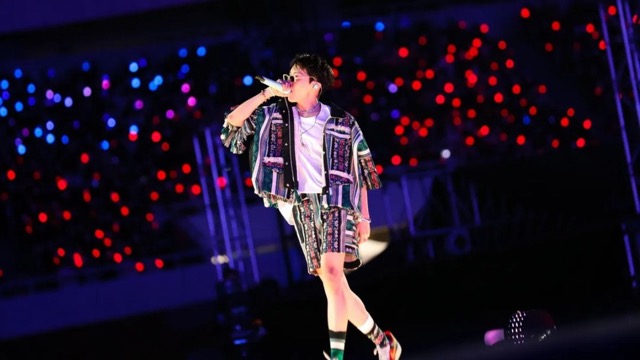
Finally, ARMYs completely rejected the notion that j-hope's collaboration with J. Cole was the result of corporate power. According to them, "on the street" was born from mutual respect between two artists. j-hope has openly spoken for years about how much he admires J. Cole, and it was that artistic connection that led to the collaboration. Likewise, кσяєαn hip-hop legends such as Yoon Mirae and Gaeko appeared on "Neuron" because they respected his talent—not because of his fame.
For many fans, Paloalto's comments were not only disrespectful toward j-hope but also reflective of the prejudice that BTS has faced for years. Yet, just like every time before, the buzzing of jealous critics has never been enough to dim the brilliance of kings. If anything, it only highlights BTS's superiority. BTS has never sought to tear down younger artists; instead, they have consistently shown support and encouragement to their juniors. Meanwhile, others—despite lacking comparable achievements—continue to act superior while drowning in their own resentment and envy.