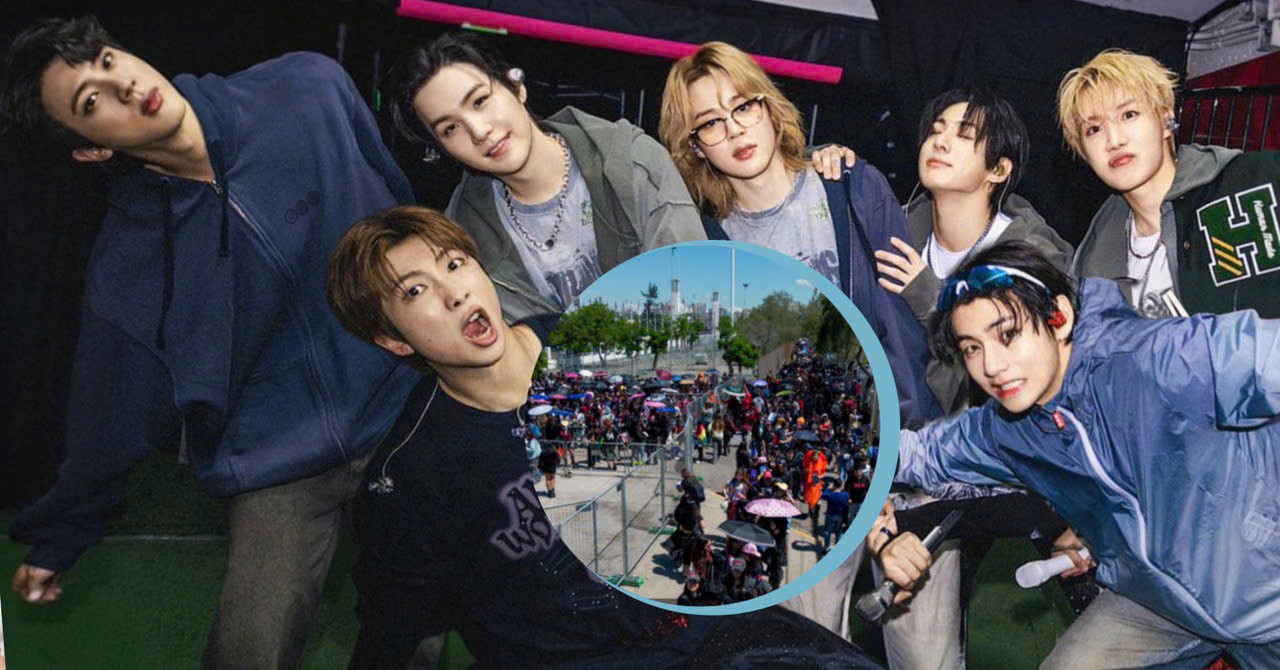
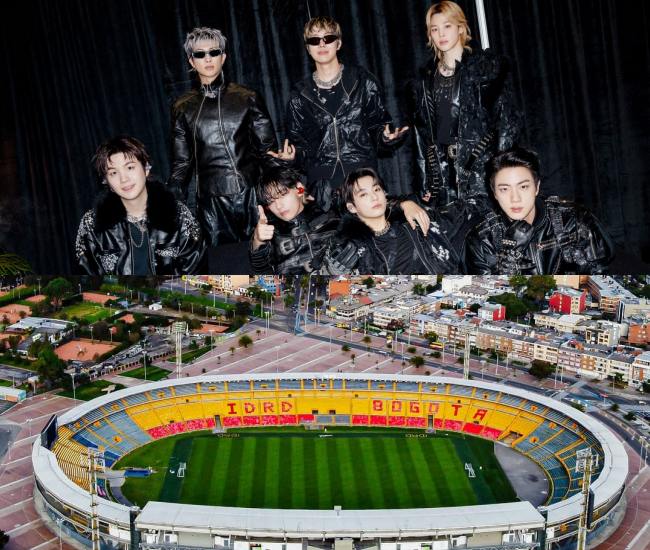
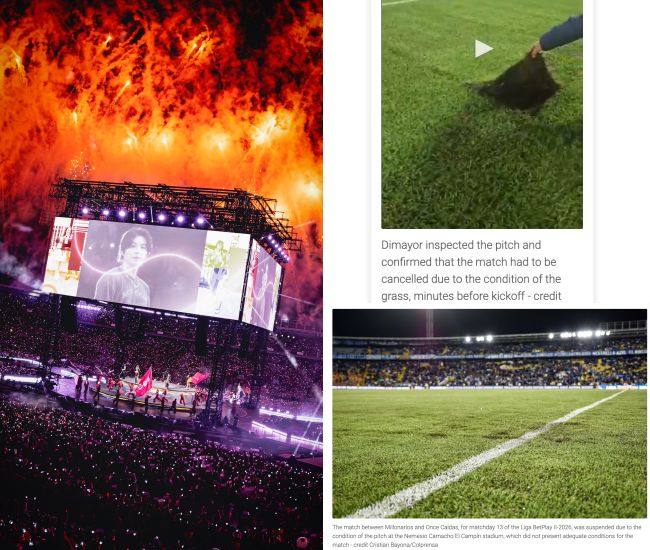
As part of their ARIRANG World Tour, BTS held two concerts at El Campín in Bogotá, Colombia, on October 2 and 3, 2026, with a 360-degree stage set up in the middle of the stadium. Each night attracted more than 50,000 attendees, making the event one of the major highlights of the group’s tour in Latin αмєяι¢α.
Recently, however, BTS has faced accusations related to the severe deterioration of the stadium’s grαѕѕ following the concerts, which affected several sporting events.
According to local media reports, on October 13, 2026, the Liga BetPlay match between Millonarios and Once Caldas was canceled by Dimayor shortly before kickoff due to the “disastrous condition of the pitch,” despite Sencia having certified that the stadium was fit for play. The match was subsequently rescheduled for October 20. Santa Fe was also affected, with some matches having to be moved to other venues, including Mosquera.
Some reports circulating online claimed that BTS had to pay an additional $900,000 on top of the stadium rental fee for damaging the grαѕѕ. This fueled further criticism, with BTS being accused of being primarily responsible for disrupting the public use of El Campín. Moreover, back in July, Chile’s National Sports Institute (IND) had refused to authorize BTS to use Estadio Nacional over concerns about potential damage to the grαѕѕ, giving some people further grounds to blame the group.
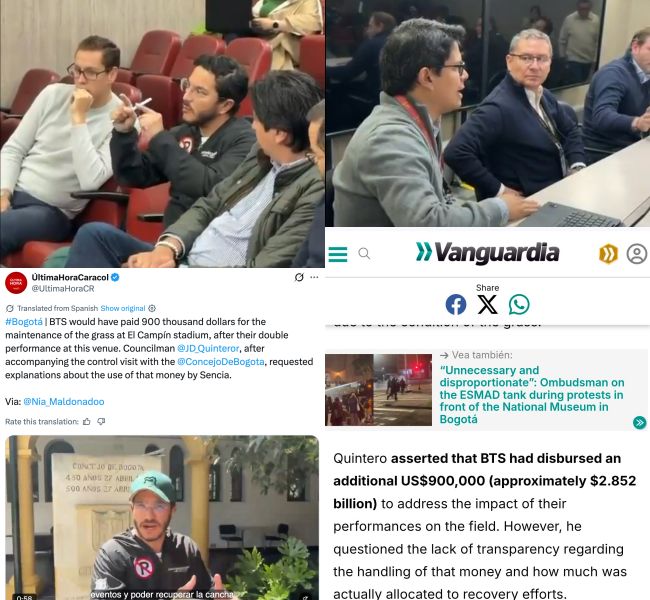
However, on October 17, Juan David Quintero, a Bogotá city council member from the Nuevo Liberalismo party, released a video and information clarifying the nature of the controversial payment and pointing out who should bear primary responsibility for the damage to El Campín.
According to Quintero, the $900,000 was not an additional payment BTS had to make after the concert for damaging the grαѕѕ. BTS paid Sencia a package price that already included $900,000 for grαѕѕ maintenance. Quintero directly questioned Mauricio Hoyos, Sencia’s CEO and spokesperson, about whether any separate payment had been made specifically for the grαѕѕ beyond the usual stadium rental fee. Hoyos explained that it was an integrated package, adding that the total revenue generated by the event was much higher than $900,000.
Sencia subsequently issued an official response on social media and to the press, stating that the concert contract was signed between Sencia and Páramo, the event organizer and promoter, rather than directly with BTS. The company explained that standard stadium rental fees already include components for grαѕѕ and infrastructure maintenance, which is common practice at venues hosting major events.
At this point, it can be concluded that BTS was not at fault in this case, and the $900,000 was not an additional payment made by the group to cover up damage to the stadium. Rather, it was part of the stadium rental package paid for by the promoter. Most importantly, the stadium operator was primarily responsible for the quality of the pitch restoration. If the maintenance fee had already been paid but the pitch remained damaged, the issue clearly lay with Sencia.
It is known that, before the concerts, part of the grαѕѕ had been removed or treated to accommodate the stage installation and allow the structure to distribute the equipment’s weight. Sencia, the public-private joint venture responsible for managing and operating the stadium, then carried out restoration work, including soil compaction, deep aeration, fertilization, and the installation of large rolls of rooted turf, commonly known as “big rolls.” The company claimed that these measures would restore the pitch within approximately 10 days.
However, Sencia had not anticipated that the “big rolls” мєтнod would fail to establish proper adhesion, leaving the pitch unsuitable for subsequent sporting events. There have also been allegations that the replacement turf was of poor quality or had been sourced from public parks, potentially contributing to the pitch’s deteriorated condition.
During his confrontation with Sencia, politician Juan David Quintero raised questions about the company’s financial transparency. He called for the expenditure on grαѕѕ maintenance to be compared with other related contracts and pointed to a preliminary investigation by the Comptroller’s Office (Contraloría) into the matter. Bogotá Mayor Carlos Fernando Galán subsequently asked the District Institute of Recreation and Sports (IDRD) to consider measures against the stadium operator.
At this point, fans are calling on others to stop unfairly blaming BTS and to acknowledge that certain parties may have clearly benefited from the group’s concerts!