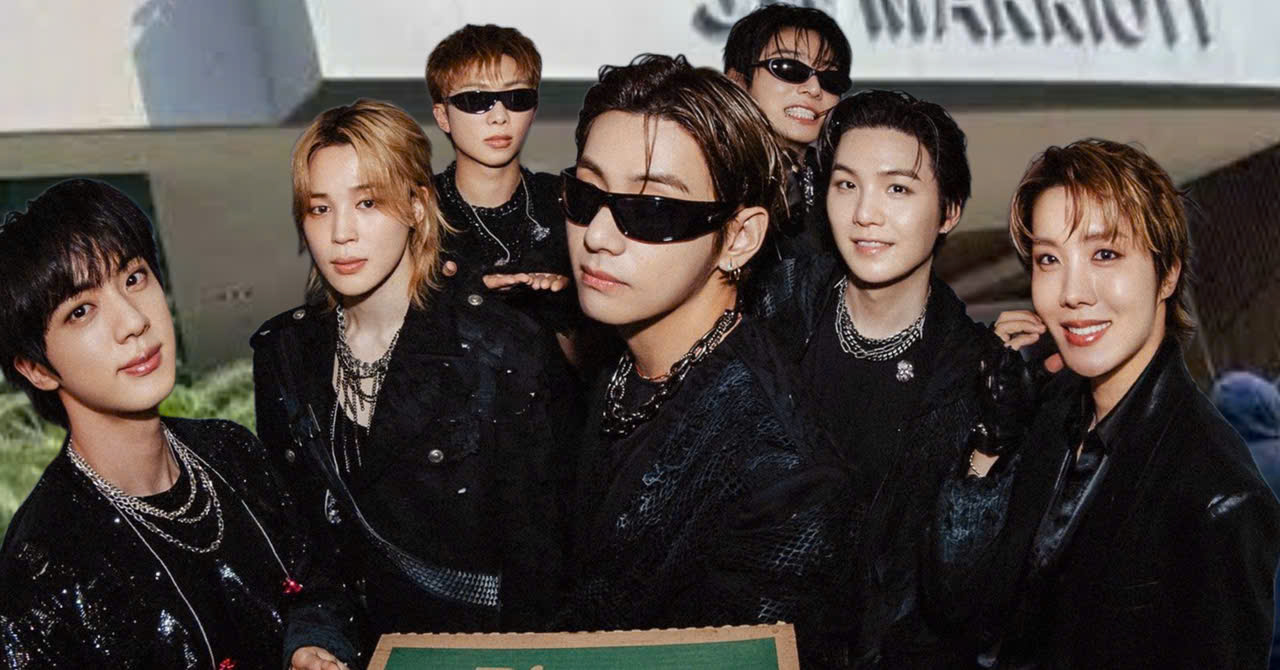
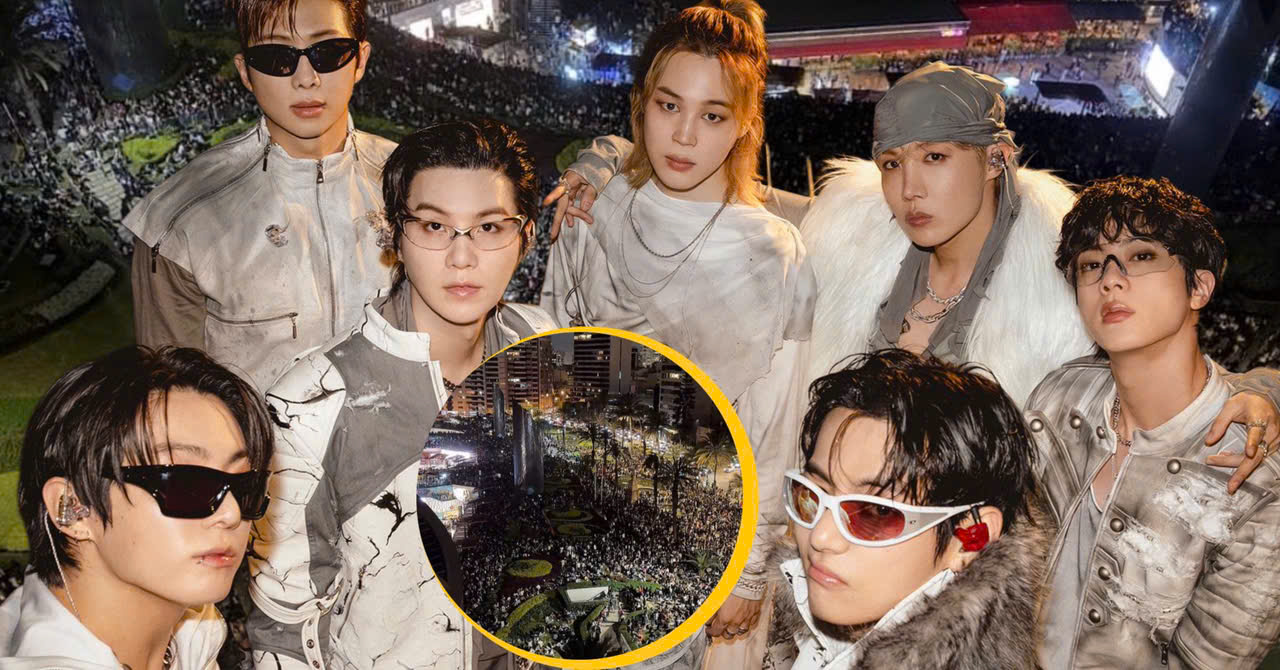
BTS is widely known as the “21st-century pop icons,” and their first steps in 2026 carry historic significance after the group’s three-year hiatus due to mandatory military service. Accordingly, since the beginning of this year, when BigHit Music announced that BTS would release a full album on March 20, the group’s comeback has become one of the most widely discussed topics worldwide.
The кσяєα Herald described the moment as “a K-pop behemoth reunites,” while Yonhap News emphasized the group’s brand power by quoting HYBE: “The unity of BTS will serve as the momentum to help the company overcome internal difficulties and fierce competition.” Meanwhile, Billboard hailed BTS’ full reunion as a defining pop-culture moment of 2026, and ιи∂ια Today wrote: “The most ambitious comeback of BTS… the Kings of K-pop are back, and the whole world is ready to listen.”

While news of BTS’ return was met with overwhelming enthusiasm from fans and readers around the globe, The New York Times unfortunately “misstepped” in this news cycle. A post from the newspaper quickly sparked backlash, with ARMYs even accusing it of “exploiting BTS’ name.”
Specifically, on Saturday, January 3, The New York Times published a front-page article titled “In 2025, K-pop Battled Its Demons,” offering a broad analysis of the K-pop landscape in 2025. The issue arose when the newspaper’s official Twitter account shared the article link accompanied by a caption that primarily referenced BTS and the global anticipation surrounding their 2026 comeback.
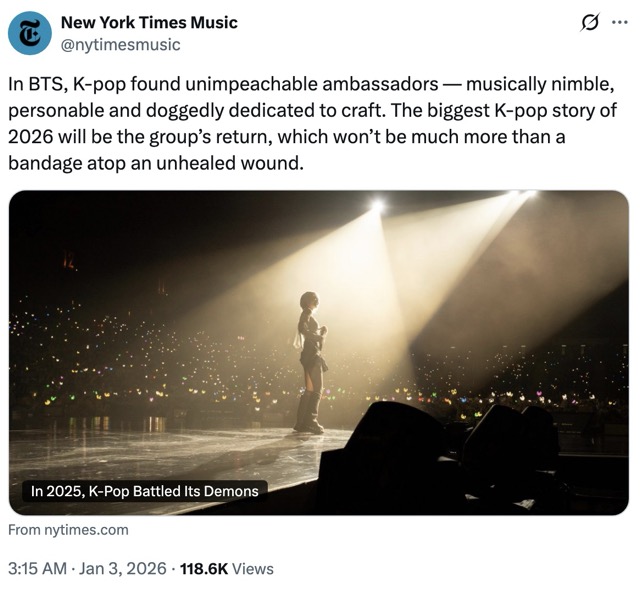
Fans who read the article via that link pointed out a stark disconnect between the caption and the article’s actual content. While the caption suggested a BTS-focused narrative, the article itself centered on acknowledging K-pop’s global expansion, the K-Pop Demon Hunters phenomenon, internal conflicts and controversies within the K-pop industry, and questions surrounding the long-term sustainability of the current K-pop model.
Although the article briefly mentioned BTS and their 2026 return, this was not its main focus. The New York Times used BTS merely as a point of reference to frame and compare newer phenomena. This left fans confused as to why BTS was foregrounded in the caption, as if the article revolved entirely around them.
As a result, many fans concluded that BTS’ name had been used as clickbait to drive traffic at a time when global attention is firmly fixed on the group. Fans expressed anger, arguing that The New York Times had subtly diminished the significance of BTS’ comeback and the anticipation surrounding it by framing the group as little more than a temporary solution to the K-pop industry’s struggles following 2025.
Some fans also pointed out that the article’s author, Jon Caramanica, has previously been embroiled in controversy after releasing a podcast targeting Jungkook, BTS, and K-pop with language that many viewed as hostile, disrespectful, and racially biased. In their view, the writer failed to learn from that incident and continued a pattern of disrespect toward BTS with this latest piece.
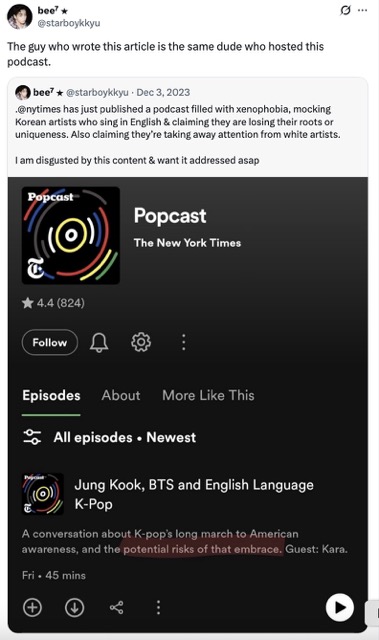
Fans are now spreading calls to avoid clicking the article link, voicing their outrage and labeling the incident a disappointing example of “clickbait” journalism from a publication they once considered highly credible:
- you should be ashamed to use and reduce the name and the comeback from the biggest group globally right now, who have been waiting for four years to return after being FORCED to pause their career to serve their country, to a “bandage" for the damages caused by another group
- This is the cheapest trick you could use. How come your heading doesn't sync with your substance?! I thought the brand 'New York Times' meant soмєтнing! Anyways, thanks for the piece! You are successfully blocked. ARMYS, be kind enough to block and not click!
- This article clearly shows what happens when the person αѕѕigned to write K‑pop stories is a BTS hater. Lmao, they must feel miserable watching BTS continue to succeed, knowing they can’t escape covering them even at work.
- At this point, The New York Times and other media outlets are clearly using BTS’s name as clickbait. They know mentioning BTS guarantees engagement, so it’s less about real reporting and more about chasing нιтs on social media.
- What unhealed wound?? NYT its time for you to follow real journalism
- I am surprised at the lack of depth and research in this article. To the editors of the prestigious New York Times, my favorite newspaper, I am extremely disappointed in this poor choice. Using BTS as clickbait is a new low.
- This article is .. way off base. Unhealed wound? No sir. We were never wounded. We were simply waiting. The only thing ARMY cares about right now is on this website: 2026bts.com
- An embarrαѕѕingly poor excuse for journalism by someone who dares to call themselves a journalist. Focus on Bangtan, ARMY!
- Terrible article. You're trying to get attention by using BTS's name, as always. Only BTS can get attention, they really are the kings.
- Don't click on this or hype it's basically a piece about njns