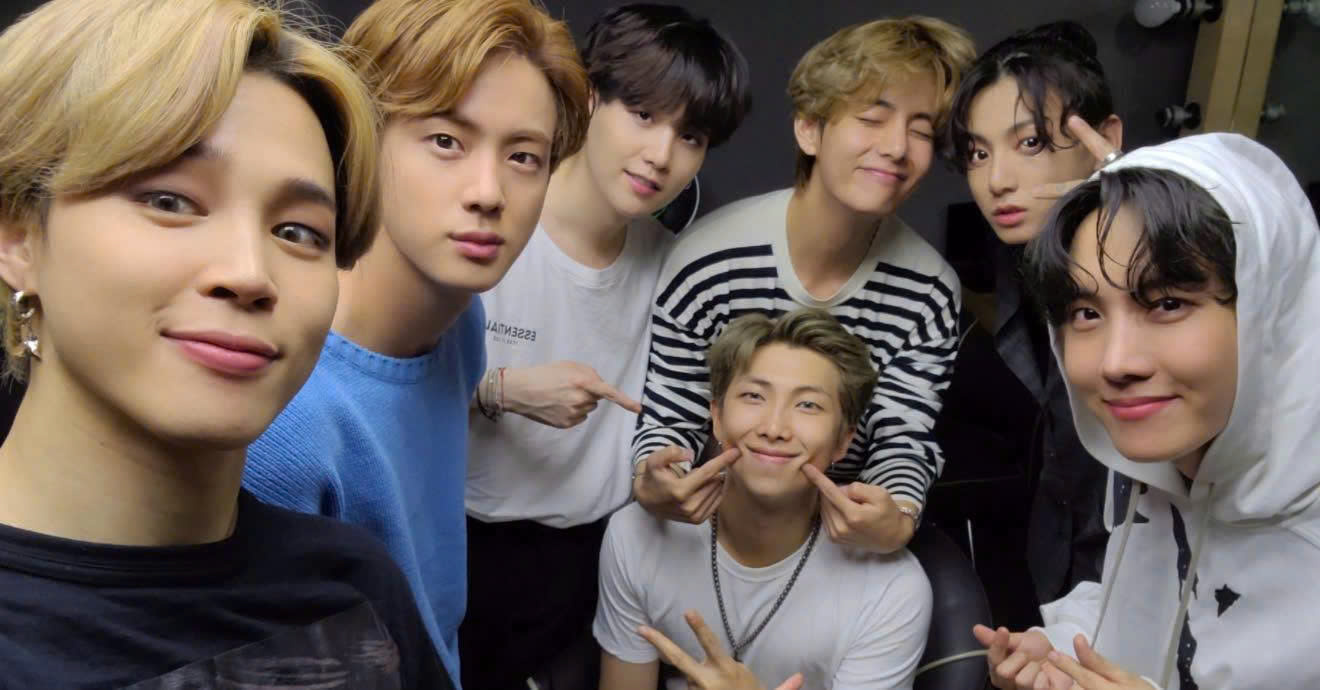
Last month on the 29th, BTS announced through the official social media accounts of all seven members that they would not submit their music for consideration at the 69th GRAMMY Awards, scheduled to take place next February. The move was widely interpreted as a direct protest against the Recording Academy's newly introduced Best Asian Pop Music Performance category—a decision that many critics believe separates Asian artists from equal competition in the General Field categories.
Following BTS's ѕнσ¢кing announcement, the GRAMMYs and several senior Recording Academy officials quickly responded. CEO Harvey Mason Jr. and Zeena Koda both insisted that the new category was not designed to limit artists' opportunities, but rather to expand recognition for Asian pop music. However, the dominant public reaction dismissed their explanations as nothing more than "empty wordplay."

More notably, the GRAMMYs were also accused of responding out of spite by removing BTS's official 2021 "Dynamite" and 2022 "Butter" performance videos from their official website. But that wasn't the end of it! Fans recently claimed they had uncovered evidence suggesting that the GRAMMYs had actually been boycotting BTS as early as a month ago, and that after being exposed, they attempted to erase the evidence.
Specifically, ARMYs recently resurfaced a Reel that had been posted by the official GRAMMY account back in May. The video featured a conversation between Frankie Yaptinchay—Head of Global K-Pop at Amazon Music and Director of the Recording Academy's Gold Music Alliance—and Zeena Koda, former Senior Executive at Atlantic Records, current Vice President of Marketing at Universal Music Enterprises (UMG), and one of the key figures who advocated for the creation of the Best Asian Pop Music Performance category.
Throughout the three-minute-and-forty-three-second conversation, the two discussed the rapid rise of Asian artists in the global music industry, the importance of authentic representation, building stronger communities, and creating more opportunities for the next generation of Asian musicians. What surprised fans and online users, however, was that BTS was never mentioned even once throughout the entire discussion.
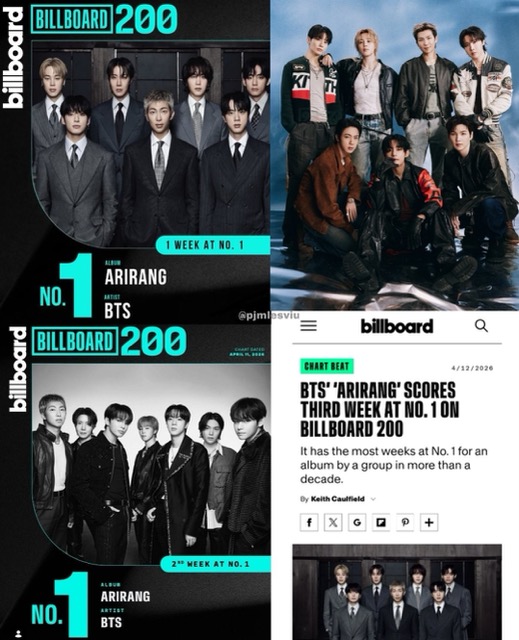
To many observers, this was a striking contradiction. For years, BTS have been widely credited by international media with having "paved the way"—breaking language barriers, opening the global market for Asian artists, reshaping the industry's perception of non-English-language music, and proving that an Asian act can compete on equal footing in the GRAMMYs' biggest categories.
What further fueled public outrage was the fact that just days before the controversy erupted, Zeena Koda herself had published a lengthy statement defending the GRAMMYs. In it, she argued that the new category "NOT decades deep pop superstars" like BTS," but was instead intended to give emerging Asian artists greater visibility. Many found it contradictory that she was willing to invoke BTS when defending the new category, yet completely erased the group's existence during a conversation about the globalization of Asian music—a contrast that only reinforced accusations of hypocrisy.
Once the Reel began circulating again, online criticism quickly intensified over the way the GRAMMYs framed the narrative surrounding Asian representation.
One fan wrote: "They talked about the new Asian category and the globalization of Asian music, but the most ironic is they just ignored and omitted any mention of BTS, as if they had never existed—when it was precisely them who are true pioneers of that global expansion. This isn’t just a casual omission: it’s erasing from the conversation the very artists who actually drove that change. The Grammys continue to be exposed as fake and hypocritical! How ridiculous they are!"
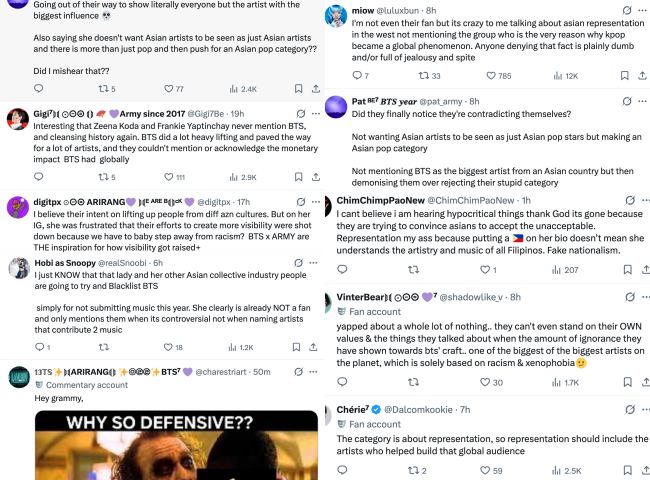
Another fan added: "It's fascinating to watch people talk endlessly about "Asian representation" while refusing to acknowledge the artists who fundamentally changed how the global music industry viewed Asian acts. You cannot have an honest conversation about the globalization of Asian music market without mentioning BTS. Whether you like them or not, they broke barriers that many in the industry once insisted couldn't be broken. They topped charts, sold out stadiums, reshaped the industry's perception of non-English music, made stadiums all around the globe sing their songs word for word, bar for bar and made institutions to take Asian artists seriously. So when people celebrate this new era of "representation" while conveniently leaving out one of the most influential acts in that story, it doesn't feel like representation. It feels like selective history."
As criticism and exposes spread rapidly across social media, the GRAMMYs' subsequent actions only raised even more questions. Fans first noticed that the official GRAMMY account had disabled comments on the Reel to prevent further backlash. But apparently that wasn't enough. Shortly afterward, the organization deleted the Reel altogether—a move that ARMYs accused of being an attempt to erase evidence of what they described as the GRAMMYs' long-standing boycott of BTS.
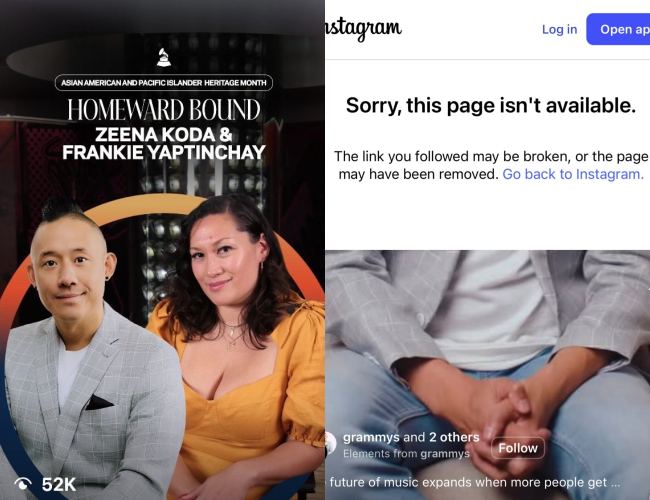
The GRAMMYs' handling of the situation has left many internet users frustrated, prompting even more scathing reactions such as "This is disgusting," "What an embarrαѕѕment," "So petty," "Deleting the evidence only makes it look worse", "Grammys so openly being known as яα¢ιѕт and xenophobic this year", "grammys digging themselves a very deep hole nobody is taking them serious", "Anyone denying that fact is plainly dumb and/or full of jealousy and spite", "Did they finally notice they're contradicting themselves?", "They’re completely overwhelmed by the situation",...