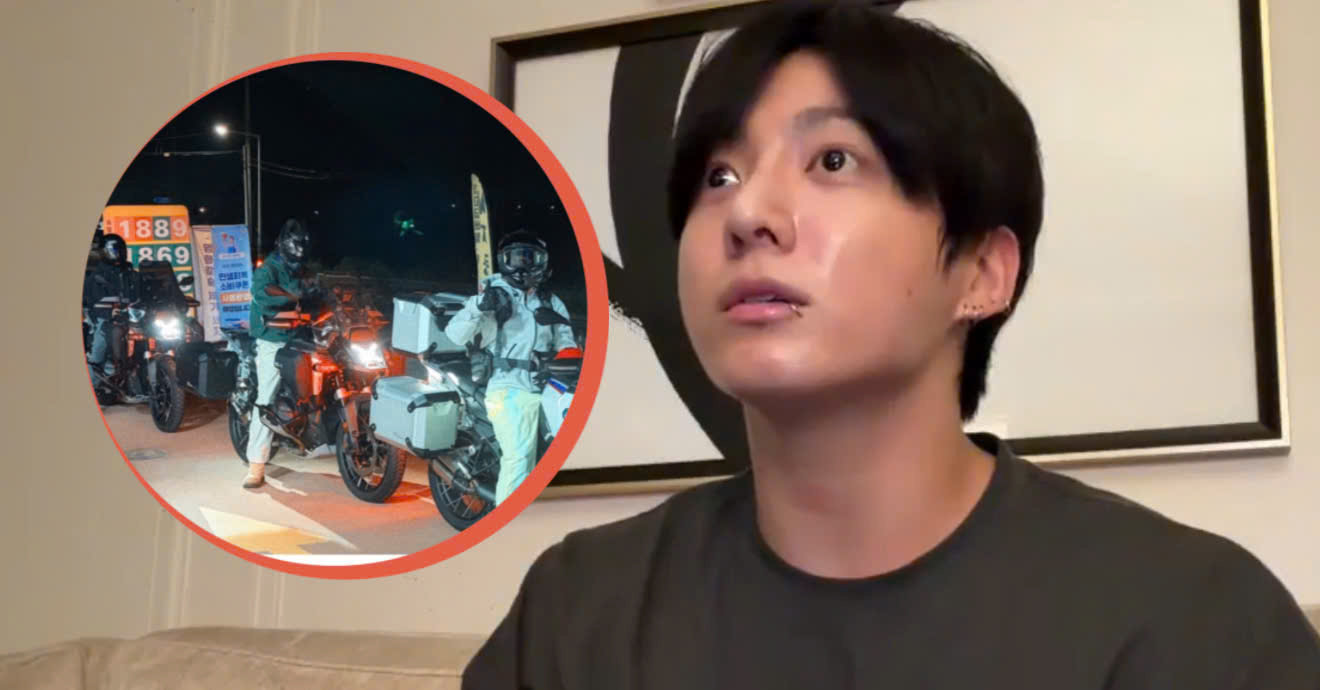
The music industry was shaken on the 29th after all seven BTS members simultaneously announced on their personal Instagram accounts that they would not be submitting their fifth studio album, ARIRANG (released this March), for consideration at the 2027 GRAMMY Awards. The announcement came shortly after the Recording Academy introduced the new Best Asian Pop Music Performance category, which many critics believe could limit equal competition for Asian artists in the prestigious General Field categories.
As the controversy continued to grow, Harvey Mason Jr., CEO of the Recording Academy, responded just one day after BTS's announcement, offering an explanation for the creation of the new category while also addressing the group's decision not to participate in this year's awards.
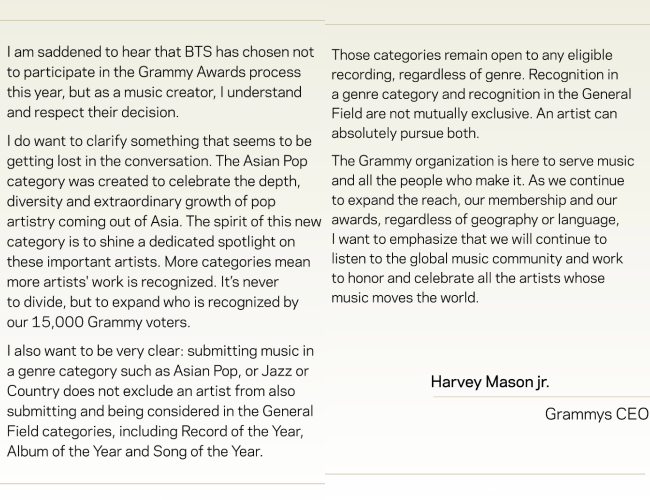
The CEO first expressed his disappointment, saying: "I am saddened to hear that BTS has chosen not to participate in the Grammy Awards process this year, but as a music creator, I understand and respect their decision."

He then argued that the public had misunderstood the purpose of the Best Asian Pop Music Performance category. According to Harvey Mason Jr., the award was created to recognize the remarkable growth of Asian pop music and provide more opportunities for artists from the region to be honored. He emphasized that adding a new category was not intended to separate artists, but rather to expand recognition across the Recording Academy's more than 15,000 voting members.
More notably, the Recording Academy CEO directly rejected the argument that Asian artists would be "confined" to the new category. He stated: "I also want to be very clear: submitting music in a genre category such as Asian Pop, or Jazz or Country does not exclude an artist from also submitting and being considered in the General Field categories, including Record of the Year, Album of the Year and Song of the Year," he continued. "Those categories remain open to any eligible recording, regardless of genre. Recognition in a genre category and recognition in the General Field are not mutually exclusive. An artist can absolutely pursue both."
However, these explanations have only fueled further debate. Many observers argue that the concern raised by BTS and a number of industry experts has never been about the rules on paper, but rather about how the Grammy system operates in practice. For years, the Recording Academy has retained the authority—and has often been perceived as willing—to move submissions into categories different from those originally chosen by the artist or record label if it considers them a better fit.
One of the most frequently cited examples is Tyler, The Creator. Although IGOR incorporates strong elements of pop, soul, and R&B, it ultimately competed in and won Best Rap Album. Tyler later publicly expressed his frustration, suggesting that he had been boxed into the rap category because of his race. By contrast, Justin Bieber submitted Changes for consideration in the R&B categories, only for the Recording Academy to reclαѕѕify it into the Pop categories.
Many journalists and academics have also pointed out that once a dedicated Asian Pop category exists, Grammy voters may naturally begin thinking, "This is the appropriate place for Asian artists." As a result, Asian artists could become less likely to be seriously considered in the General Field, even though they remain fully eligible under the rules. The issue is that after years of global success and impact, the Grammy answer was to create a separate category for Asian artists instead of recognizing them equally within the existing ones. That's exactly what BTS objected to.
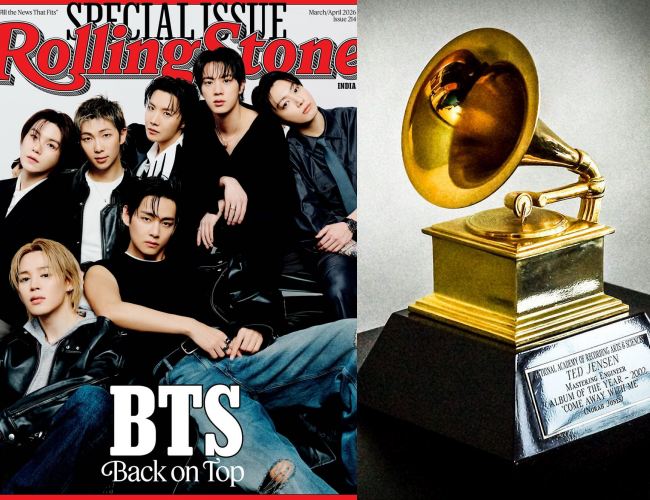
Meanwhile, the Recording Academy's voting process has been the subject of controversy for years. Interviews with anonymous Grammy voters published by outlets including Variety, Billboard, and the Los Angeles Times have sparked debate after some voters admitted they did not listen to every eligible work before casting their ballots. In addition, the system has repeatedly faced criticism over allegations of a lack of transparency, the influence of record-label lobbying, and inconsistent category placement decisions.
BTS is also far from the first major artist to publicly distance themselves from the Grammys. The Weeknd, Drake, and Jay-Z have all criticized the Recording Academy or refused to participate during different periods, arguing that the system fails to fairly recognize artistic excellence and cultural impact. Eminem has likewise criticized the Grammys on multiple occasions, most notably through songs such as "Without Me" and "Fall," where he expressed skepticism about how the awards choose their winners.
Following the Grammy CEO's response, fans flooded social media with frustrated reactions: "Just bullsh1t", "The hypocrite! Let's see who needs whom. BTS don't need an award like this; they're worth more than that", "What about αмєяι¢αn pop?? Where's that category?", "This is a pure attempt on damage control and saving face by being diplomatic which is spectacularly failing and creating even more damage imo", "They're trying to make us believe they never disrespected BTS's work, when they were clearly mocking them by giving the award to other, obviously αмєяι¢αn, artists", "Instead of Global you should have written only for Westerners. LOL",...