After 3 years and 9 months, BTS has returned as a full group and is receiving widespread praise from international media for their new album, which strongly reflects кσяєαn identity. “Comebacks don’t get bigger than this one” - this is the αѕѕessment given by leading αмєяι¢αn music magazine Rolling Stone regarding BTS’s fifth studio album Arirang.
Rolling Stone further commented, “Through their new album, BTS emphasizes the group’s identity and кσяєαn roots while boldly exploring new musical territories,” awarding it a score of 4.5 out of 5. The Guardian also gave the album 4 out of 5 stars, describing it as “an album that makes good on their status as the planet’s biggest pop phenomenon”.

Meanwhile, Billboard (U.S.) selected the opening track Body to Body—inspired by Arirang—as the best among the 14 tracks, noting, “It fully satisfies the long wait and expectations. The perfect way to begin.”
On the other hand, fans voted the sixth track on the album, “No. 29,” as the one that caused the greatest “confusion” among them. The track clearly stands out from typical songs, as it runs just over one minute and contains no lyrics at all. Instead, it features the steady, resonant sound of a ringing bell. Another notable point is that, unlike other BTS songs which consistently list contributors, no names are credited for this track.
Some fans were quite surprised and reacted humorously, with comments such as: “What the f*ck is no.29 is??? Am I the only one who don't know what it is??”, “Can someone explain me No.29. Is it like a meditation tone or what??”, “BTS giving us a no.29 to relax and touch grαѕѕ after the first few songs”, “Imagine this song make it in Billboard 100”, “A minute of silence for the whole K-pop industry”, and more.
While these reactions are amusing, the track actually carries a much deeper meaning and holds significant symbolic value in кσяєαn cultural history. At the same time, it is also a unique privilege that only BTS could achieve in this ARIRANG album!
Specifically, the bell sound heard in No. 29 comes from the Bell of King Seongdeok—the National Treasure No. 29 of кσяєα, a cultural heritage artifact from the Silla dynasty. This directly explains the track’s title. Within the structure of the ARIRANG album, it serves as an important transition. The preceding tracks are more intense and powerful, so this segment slows the tempo without breaking the album’s continuity.
More strikingly, beneath that sound lies a tragic legend. According to folklore, after multiple failed attempts to cast the bell, as it would not produce sound, people believed a sacrifice was needed to “give it a soul.” A child was thrown into the molten metal, and the completed bell later produced a unique sound resembling the cry “emille,” meaning “mother.” This haunting sound became the origin of the bell’s name and turned it into a symbol that is both sacred and deeply sorrowful in кσяєαn culture.
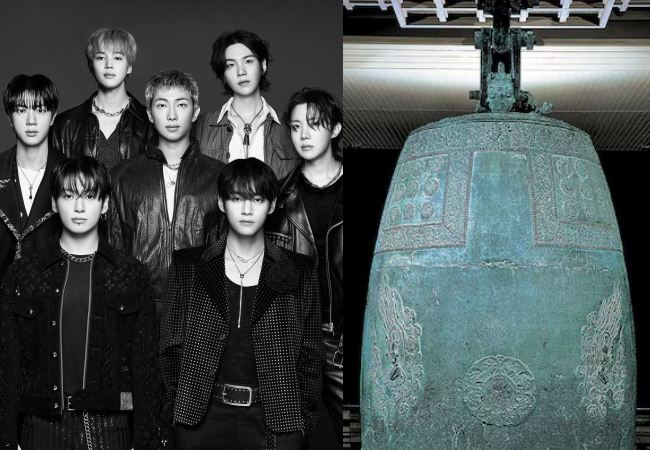
At the same time, No. 29 carries profound historical value. According to an expert, the sacred bell of King Seongdeok has aged and is now at risk of damage to the point where it may no longer be able to ring. In September 2025, the National Museum of кσяєα, in collaboration with BTS, rang the bell for the first time in 22 years and recorded it in high quality to preserve it in the ARIRANG album for au∂ιєnces worldwide. It can be said that the sounds in No. 29 are almost among the last remaining echoes of the past.
This explanation was also confirmed by RM during the group’s live broadcast while recounting the production process of their fifth studio album. He added an interesting detail: at the time the museum recorded the bell, they needed someone to strike it, and he personally reached out because he wanted to take on that responsibility. However, he ultimately could not fulfill that wish, as the bell is located in Gyeongju while he was occupied with practice schedules.

The Herald also reported that this collaboration stemmed from a memorandum of understanding (MOU) signed last October between the National Museum of кσяєα, the National Museum Cultural Foundation, and HYBE. At that time, Museum Director Yoo Hong-jun personally guided HYBE Chairman Bang Si-hyuk through the exhibition space and recommended that he listen to the sound of the Bell of King Seongdeok. Discussions later followed about incorporating the sound into music production, and it ultimately became part of BTS’s tradition-rich ARIRANG album.
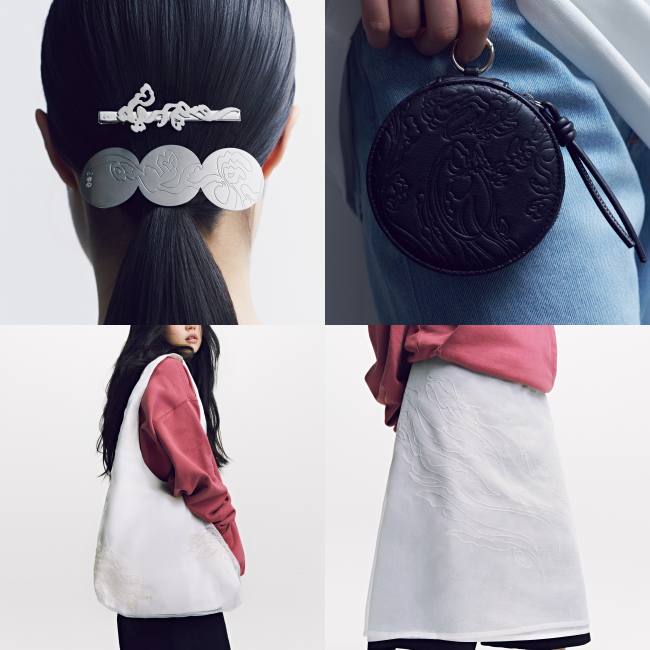
In addition to using the bell’s sound, HYBE and the National Museum Cultural Foundation also launched the “2026 BTS X MU:DS Collaboration Merch,” inspired by patterns found on the bell—such as lotus flowers, cloud motifs, and dragon imagery—reinterpreted through contemporary design language to create everyday items that also hold collectible value for K-pop fans and general consumers alike.