Big Hit Music announced on the 24th that the title track “Swim” from BTS’s fifth album had topped Spotify’s “Daily Top Songs Global” chart for three consecutive days. In addition, “Body to Body” from BTS’s fifth album ARIRANG also held the No. 2 position for three consecutive days, while other tracks—including “Hooligan” (No. 4), “FYA” (No. 5), and “NORMAL” (No. 6)—continued to maintain high rankings on the charts. Domestically, “Swim” also secured top positions on the daily charts of major music platforms such as Melon, Bugs, and Genie on the 23rd.
Meanwhile, global media outlets have also praised BTS’s title track for its balanced blend of emotion, message, and musical quality. Rolling Stone described the track as “a synth-pop love song about diving into messy emotions,” emphasizing its introspective and layered storytelling, while ELLE noted that it “captures the group’s decision to move forward steadily rather than resisting adversity.” Star News called it “a refined and deep song” that leaves a lasting impression. Meanwhile, The Guardian characterized “Swim” as “a breezy synth-pop track,” praising its accessibility while maintaining a distinct artistic identity. Overall, “Swim” is clearly receiving both widespread public love and strong critical recognition.
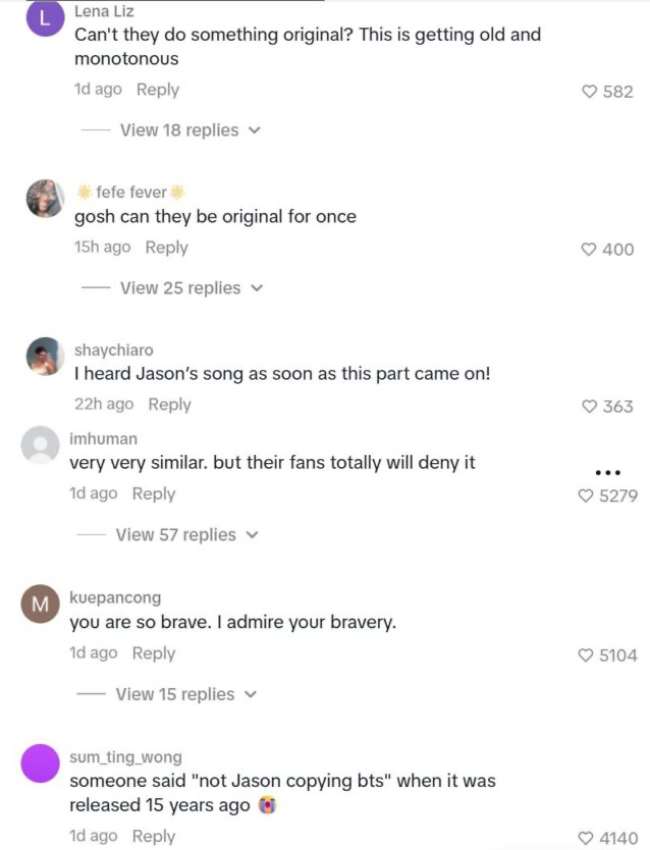
Despite its rapid success, BTS’s title track from their fifth album has not been free from controversy, including allegations of plagiarism. Recently, a well-known TikToker who often shares similarities between songs posted their thoughts comparing BTS’s “SWIM” with “Ridin’ Solo” by Jason Derulo.
The original post merely pointed out similarities—soмєтнing the creator regularly does with many songs—but it later became the source of harsh criticism toward BTS. Some mocked the group for being overhyped, suggesting they should produce soмєтнing more original. Others sarcastically commented that if it were any other group, they would have already been accused of “copying.” Meanwhile, some went as far as directly accusing BTS of plagiarism, claiming that they had repeatedly copied music from major artists since their debut.
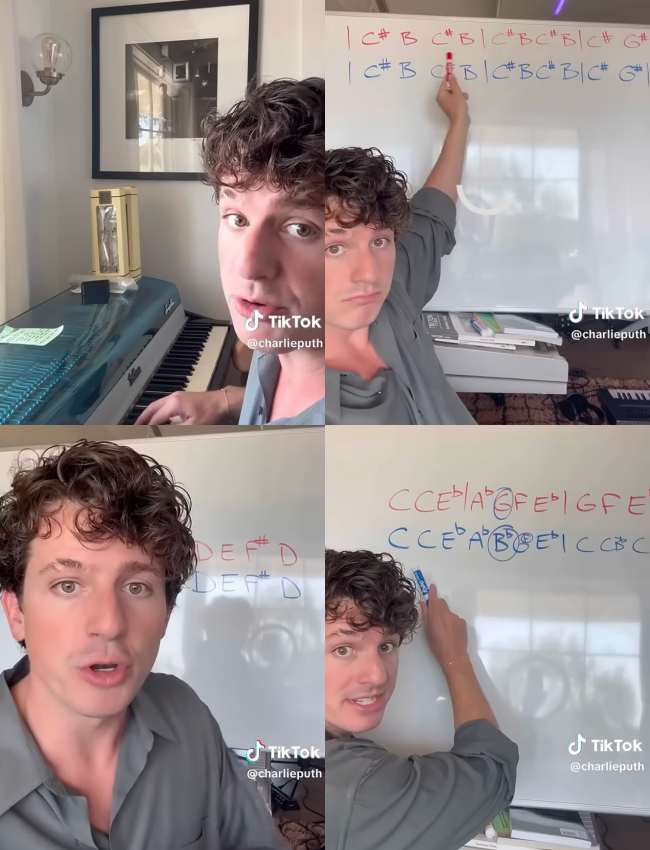
Amid this situation, a video of Charlie Puth explaining the difference between using musical techniques and songs simply sounding alike has resurfaced and gone viral again. The video comes from the eighth episode of his TikTok series “Professor Puth,” originally shared in October 2025. Puth explained that there are only 12 notes in a musical scale, stating: “When you're writing a new song, there is bound to be similarities to an older song, but what you have is what I like to call the four-note threshold.”
He further clarified that if a new song contains four identical notes to an older one, it is not considered interpolation. However, if it exceeds that threshold with five consecutive identical notes, then it may be regarded as interpolation.
On the other hand, the singer-songwriter emphasized that reusing musical elements is not inherently wrong and that people should stop criticizing it so harshly. He stated: “Sometimes artists will α¢¢ι∂єитally interpolate each other, and it's almost never done maliciously. We really have to stop demonizing this one. It happens.” He added that remixing and sampling have existed for a long time and have contributed to the creation of many “really great records.”
Charlie Puth, widely recognized for his musical expertise and often regarded as a “sound wizard,” has produced numerous нιт songs over the years. Clearly, few can explain this topic as precisely and accessibly as he does. His explanation also serves as a compelling response to the TikToker’s claims, effectively pouring “cold water” on unfounded accusations that “Swim” is a plagiarized product.
Additionally, ARMYs pointed out that Ryan Tedder—the main producer of “Swim”—previously worked with Jason Derulo on “Want to Want Me” (2015), one of Derulo’s biggest нιтs. Given Tedder’s professional connection to both BTS and Jason Derulo, it seems highly unlikely that he would “copy” music from Derulo into a track for global K-pop superstars.

In an industry built upon a finite system of musical notes and familiar structures, some degree of similarity between songs is inevitable. In fact, the history of popular music has shown that sampling and interpolation are not only common practices but also catalysts for groundbreaking creativity. More importantly, as Puth emphasized, the line between “similarity” and “intentional borrowing” should be evaluated carefully rather than judged hastily.