How long will K-pop remain trapped under the label of “Asian music”? BTS’s recent announcement that they would boycott the GRAMMY Awards has brought this long-standing question back into the spotlight in recent weeks.
For the new category introduced by the GRAMMYs this year — “Best Asian Pop Music Performance” — BTS effectively declined to submit their work, saying: “We hope music will be recognized and loved for what it is, rather than being divided by region or language. Thank you, as always, to ARMY and everyone who supports us." The statement directly calls into question the reality that, even after K-pop has firmly established itself in the mainstream global music market, it is still being placed into a separate category simply under the label of “Asian.”
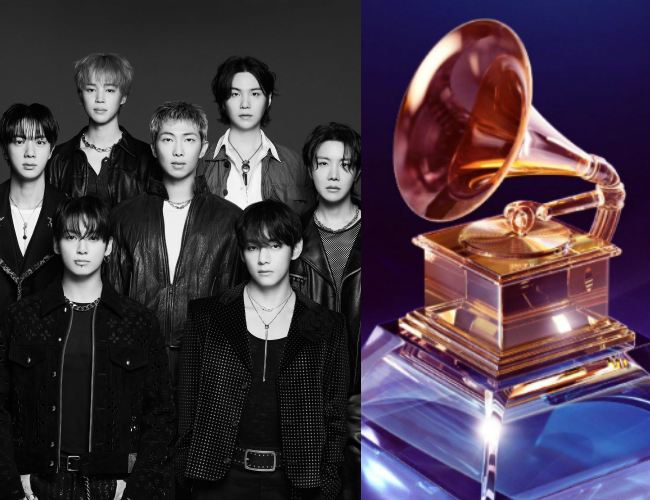
What makes this particularly notable is that BTS is the first and only K-pop artist to publicly and directly push back against the GRAMMYs, just one month after the organization announced the new category. Their stance, then, was followed by widespread support from celebrities and industry experts in кσяєα and across Asia. The New York Times also took notice of this detail and devoted an in-depth analysis to it.
In its latest article, titled “Pop Music Is the Problem,” The New York Times wrote: “The largest Asian entertainment companies, with lots of new acts to promote, may not want to fight that system on principle. But BTS, possibly the biggest act in the world since Jackson, is perhaps the only Korean recording act with the freedom and leverage to spark a reckoning.” BTS’s refusal is, in itself, a display of backbone!
Choosing to voluntarily withdraw an album that was already considered a strong contender for a major category, or setting aside a trophy that was seemingly within reach simply because of principle — these are not choices everyone would dare to make. Only artists who have reached a position where they are already recognized by the market have the leverage to turn down an award.

BTS certainly have more than enough grounds to do so. For example, after a four-year hiatus from group activities, their fifth studio album, “ARIRANG,” immediately debuted at No. 1 on the Billboard 200 upon their return and remained at the top of the chart for three consecutive weeks. The album also set a record for the highest first-week sales by a group in more than a decade, with 640,000 copies sold.
BTS’s influence is also clearly reflected in the term “BTSnomics,” which emerged from their ARIRANG tour. The Guardian recently reported that BTS’s four sold-out shows in Las Vegas alone in May were estimated to generate an economic impact of around $340 million. Michael Mariano, Director of Economic Development at Tourism Economics, even noted that BTS’s North αмєяι¢αn tour has an impact comparable to, and potentially even greater than, the FIFA World Cup.
And that is without even mentioning the enormous collection of achievements BTS have built throughout their career, from the Billboard Music Awards and αмєяι¢αn Music Awards to the MTV Europe Music Awards, along with countless unprecedented records and historic milestones for a K-pop artist.

Now that they have become global superstars, what meaning would there be in receiving an award from such a US-centric market? The fact that BTS have reached a position where they can stand independently without being bound by the framework called the GRAMMYs is soмєтнing worth celebrating in itself, because the market has already recognized them as artists of a stature greater than almost anyone else.
On the other hand, as The New York Times points out, for кσяєαn artists other than BTS, it cannot be said that this award is not extremely important. The relatively small domestic market and the broader Asian market are simply not large enough to support the scale of investment required for кσяєαn artists today. In one way or another, they have to knock on the door of the U.S. market and challenge themselves there. As a result, this award can serve as a stepping stone, helping them gain recognition and advance further. That is why they may not be willing to speak out as forcefully as BTS have chosen to do.
However, that does not mean everyone is completely different from BTS in terms of their priorities. For example, at a recent comeback showcase, when asked about the possibility of submitting their work to the GRAMMYs, Stray Kids member Hyunjin said: “We have never worked with the goal of setting records. Our biggest goal is to make our fans satisfied and happy.” Although this approach differs from BTS’s direct opposition, the perspectives of both artists ultimately meet at the same point: putting the essence of music first.

Finally, a shout-out is deserved for Forbes journalist Bryan Rolli, who recognized this issue as early as 2020, after BTS were “snubbed” by the GRAMMYs. In his article “BTS's 2020 Grammys Shutout Reveals The Recording Academy's Cultural Blindspot,” he posed a powerful question: “As BTS continue smashing records and the Grammys continue to lose relevance, who really needs who?”
The answer now seems clearer than ever: The GRAMMYs need BTS to attract attention, but BTS have never needed GRAMMY recognition to prove their worth — or the value of the music they create!